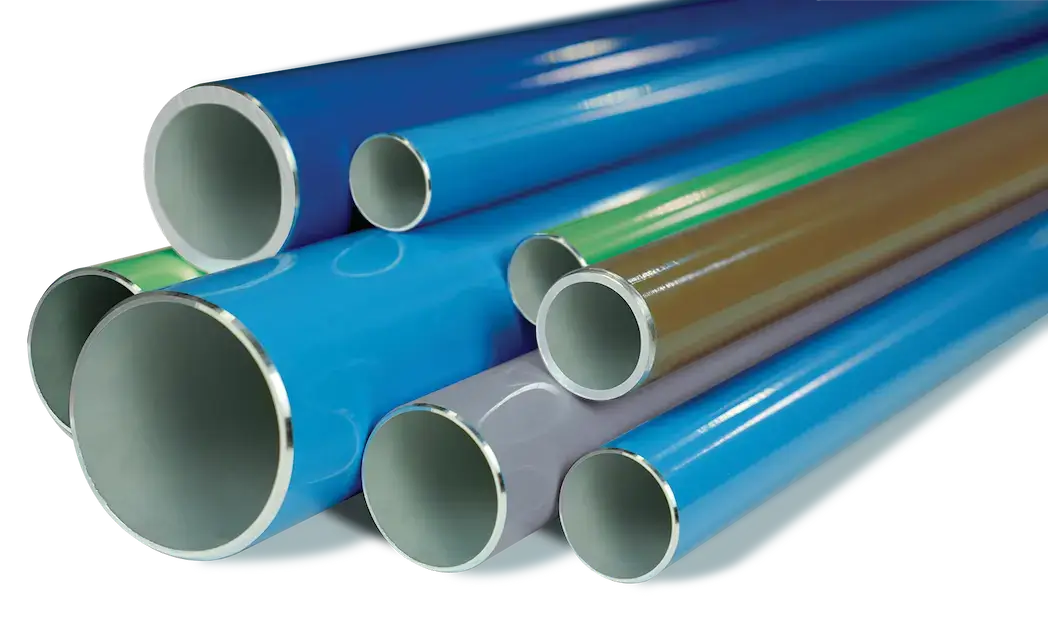
In high-pressure industrial, hydraulic, and pneumatic systems, pipe fittings are the critical connection points where leaks, failures, and safety risks are most likely to occur. Selecting the best high-pressure pipe fittings materials directly impacts system integrity, pressure tolerance, service life, and total cost of ownership.
Fittings — the components that connect, redirect, branch or terminate pipe and tubing runs — must withstand not only system pressure but also the mechanical stresses concentrated at joints: vibration, thermal cycling, and the repeated make-and-break of threaded or compression connections. Several materials are commonly used, each offering distinct strengths and limitations depending on the application.
This guide breaks down the most common high-pressure pipe fittings materials to help engineers and maintenance teams make informed, standards-compliant decisions about the connection points in their systems.
As a trusted provider of modular aluminum piping systems and accessories, Unipipe delivers fittings and connection solutions designed for performance, safety, and long-term flexibility.
Types of High-Pressure Pipe Fitting Materials Explained
High-pressure environments place unique demands on pipe fitting materials that go far beyond static load ratings. As pressure increases, fittings are exposed to conditions that can accelerate wear and failure, including:
- Stress cycling from repeated pressurization and depressurization
- Vibration and impact loading from compressors, pumps, and system startup
- Thermal expansion and contraction caused by temperature fluctuations
To perform safely under these conditions, high-pressure pipe fitting materials must offer:
- High tensile and yield strength to resist deformation
- Adequate ductility to absorb shock without cracking
- Corrosion resistance to maintain long-term structural integrity
When the wrong material is selected, failure can be sudden and severe. Common high-pressure fitting failures include:
- Thread damage or stripping leading to leaks or separation
- Permanent deformation that compromises sealing
- Bursting or rupture under peak pressure
- Galvanic corrosion at the joint when dissimilar metals meet
Because no single material is ideal for every application, pressure fitting standards define specific limits based on material type, geometry and validated testing. The following sections break down the most common high-pressure pipe fitting materials, outlining their performance characteristics, ideal applications and limitations to help engineers design safe, reliable systems.
Stainless Steel
Stainless steel is widely regarded as the top-performing material for extreme-pressure pipe fitting applications. It is commonly used in high-pressure hydraulics where fittings must withstand sustained loads, aggressive media, and severe operating conditions. Standard stainless steel fittings are often rated for 6,000 PSI or higher, with specialty designs exceeding 10,000 PSI when geometry and standards allow.
One of stainless steel’s greatest advantages is its excellent corrosion resistance, particularly in environments involving moisture, chemicals or saltwater. It also maintains strength and sealing integrity at elevated temperatures, making it suitable for high-temperature hydraulic and gas systems. In cyclic applications, stainless steel offers an exceptionally long fatigue life, reducing the risk of cracking or failure at thread roots or connection points under repeated pressure fluctuations.
The two most common grades are 304 and 316 stainless steel. Grade 304 performs well in general industrial environments, while 316 stainless steel provides superior resistance to chlorides, acids and harsh or marine conditions.
Stainless steel's primary drawbacks are cost and weight. It is significantly more expensive than aluminum or carbon steel alternatives, and its density adds weight — a consideration when systems require numerous fittings. Stainless steel fittings are also susceptible to galling, a form of cold-welding that can occur when stainless threads are assembled without proper lubrication or torque control. This can make fittings difficult to disassemble or adjust, which matters in systems requiring frequent maintenance or reconfiguration.
Because of its strength, durability and versatility, stainless steel is frequently used in aerospace systems, offshore and marine equipment, high-temperature hydraulics, high-pressure gas service, chemical dosing systems and heavy industrial machinery. For demanding environments, stainless steel remains one of the best high-pressure pipe fitting materials available. However, it is an expensive choice for less demanding applications.
Brass Fittings
Brass fittings are valued for their excellent corrosion resistance, smooth surface finish, and ease of precision machining. These properties make brass well-suited for applications that require tight tolerances and reliable sealing at moderate pressures. Typical brass pressure ratings range from 1,000 to 3,000 PSI, depending on fitting design and size.
However, brass carries several limitations. It has lower tensile strength than steel or aluminum, making brass fittings prone to thread deformation and seal compromise under pressure cycling. Brass is also a relatively expensive material — driven by copper prices — and its high density makes it one of the heavier fitting options. In certain water chemistries, brass is susceptible to dezincification, a form of corrosion that selectively leaches zinc and weakens the fitting over time.
Brass fittings are commonly found in low- to moderate-pressure hydraulic systems, lubrication circuits and instrumentation or control lines where pressures are controlled and environmental exposure is limited. While brass is widely used in consumer and light industrial applications, it is not appropriate for high-pressure gas service or demanding industrial hydraulics.
Engineers should view brass as a specialty solution, not a substitute for steel or aluminum in high-pressure systems.
Carbon Steel & Alloy Steel
Carbon steel and alloy steel fittings offer high strength and pressure capability, often comparable to stainless steel in hydraulic applications. These materials are widely used in manufacturing, agriculture, construction and mobile equipment where high pressure and mechanical durability are required.
The primary tradeoffs are corrosion resistance and weight. Unlike stainless steel or aluminum, carbon and alloy steel are highly susceptible to rust when exposed to moisture or aggressive environments. Fittings require protective coatings or plating, but these are easily damaged during installation, adjustment, or system reconfiguration — particularly at thread surfaces where corrosion typically begins. In systems that require frequent modification or maintenance, this creates an ongoing reliability concern. Carbon steel fittings also add significant weight compared to aluminum alternatives, a factor in large systems with numerous connection points.
Pressure ratings for carbon steel fittings can be very high, but ongoing maintenance is often necessary to prevent corrosion-related failures. In environments with frequent washdowns, condensation or outdoor exposure, corrosion can significantly shorten service life.
Carbon and alloy steel fittings perform poorly in marine, coastal or chemically aggressive settings, where corrosion risks outweigh their cost advantages. They are best suited for dry hydraulic systems, enclosed industrial machinery and applications where environmental exposure is limited and routine inspection is feasible.
Plastic & Polymer Fittings
Plastic and polymer fittings offer lightweight construction and low material cost, but their suitability for high-pressure systems is limited. Pressure capability depends heavily on material formulation, temperature and whether the fitting is rated for liquid or gas service.
Plastic fittings have lower tensile strength than metal alternatives, making threads more prone to stripping or cross-threading during assembly. They also cannot withstand repeated make-and-break cycles without degradation — a significant limitation in systems requiring maintenance or reconfiguration. Polymers are susceptible to creep under sustained load, thermal expansion, and UV degradation, all of which reduce pressure capacity over time.
Additionally, industry guidance and safety codes restrict or prohibit certain plastics in compressed gas systems due to brittle fracture risk. PVC and CPVC pipes in particular can shatter without warning under pressure, creating severe safety hazards. While some engineered plastics — such as certain ABS or HDPE formulations — can handle moderate pressure, they must be explicitly rated for gas service.
Plastic fittings are best reserved for low-pressure, non-critical systems where pressure, temperature and mechanical stress are tightly controlled — and where fittings will not require frequent adjustment or replacement.
Aluminum
Aluminum has become an increasingly popular material for pressure pipe fittings, particularly in compressed air, inert gas, and vacuum systems. It offers a combination of advantages that address many of the limitations found in other fitting materials.
Weight is one of aluminum's most significant benefits. Aluminum fittings are roughly one-third the weight of comparable steel fittings, reducing structural load and making installation and handling easier — especially in systems with numerous connection points.
Aluminum is naturally corrosion-resistant without requiring protective coatings or plating. This eliminates the maintenance burden associated with carbon steel fittings, where coatings can be damaged during assembly and corrosion begins at exposed threads. In clean air, inert gas, and vacuum systems, aluminum's corrosion resistance also prevents rust contamination downstream.
Unlike stainless steel, aluminum fittings are not prone to galling. Threads can be assembled, disassembled, and reassembled repeatedly without cold-welding or seizing — a major advantage in systems that require frequent maintenance, expansion, or reconfiguration. This also makes aluminum fittings more forgiving during installation, reducing the risk of damaged connections from overtorquing.
From a safety standpoint, aluminum offers ductile failure behavior. Under overpressure conditions, aluminum fittings will deform gradually rather than shatter explosively like brittle materials. This provides warning signs before catastrophic failure and makes aluminum a safer choice for compressed gas systems.
Aluminum fittings are also cost-effective compared to stainless steel or brass, offering strong performance at a lower price point — an important factor when outfitting large systems. Modern modular aluminum fittings, such as those used in Unipipe systems, are designed to create leak-free connections while allowing for controlled, ductile failure.
For compressed air distribution, nitrogen systems, vacuum applications, and any environment where modularity, safety, and low maintenance matter, aluminum fittings deliver reliable performance with lower total cost of ownership.
High-Pressure Material Performance Comparison
Selecting the best material for high-pressure pipe fittings requires balancing pressure capability, failure behavior, temperature performance, corrosion resistance and application risk. While several materials are used across industry, their performance under pressure varies significantly; especially in compressed air and gas systems where failure consequences are higher.
The table below provides a side-by-side comparison of common high-pressure pipe fitting materials to help engineers quickly evaluate suitability and limitations.
Pipe Fitting Materials Comparison Table
| Material | Typical Pressure Range | Failure Mode | Temperature Performance | Corrosion Resistance | Best Applications | Risk Notes |
|---|---|---|---|---|---|---|
| Brass | 1,000–3,000 PSI (moderate) | Gradual deformation; thread distortion | Moderate heat tolerance; weakens at elevated temperatures | Good corrosion resistance; susceptible to dezincification in some environments | Low–moderate hydraulic systems, instrumentation, lubrication lines | Not suitable for extreme pressure; deformation risk under cyclic loading |
| Stainless Steel (304/316) | 6,000–10,000+ PSI (grade dependent) | Ductile failure; controlled and predictable | Excellent high-temperature performance; maintains strength | Excellent; 316 highly resistant to chlorides and harsh media | High-pressure hydraulics, chemical processing, marine, high-temperature systems | Higher cost; correct grade selection critical for corrosive environments |
| Aluminum | Typically up to 1,000–2,000+ PSI (alloy/system dependent) | Ductile bending; non-explosive | Good thermal stability for air and gas systems | Non-corrosive; excellent resistance to oxidation | Compressed air, inert gas, modular piping, vacuum systems | Not suitable for very high hydraulic pressure; must use certified fittings |
| Carbon Steel / Alloy Steel | 3,000–6,000+ PSI (treatment dependent) | Ductile failure; may crack with corrosion fatigue | Strong at high temperatures but oxidizes if uncoated | Poor to moderate; requires coatings or plating | Industrial hydraulics, agriculture, machine tools | Corrosion risk; heavy; coating failure can lead to leaks |
| Plastic (ABS, HDPE, PE) | Highly variable; manufacturer-specific | Brittle fracture or splitting | Poor heat tolerance; softens or cracks with temperature changes | Polymer dependent; typically moderate | Low-pressure gas or air only if explicitly rated | Dangerous when non-rated; PVC/CPVC prohibited for compressed air due to shattering risk |
How to Select the Right High-Pressure Pipe Fitting Material for Your System
Selecting the right material for high-pressure pipe fittings requires evaluating how the system operates under real-world conditions, not just nominal ratings. A structured approach helps reduce risk and improve long-term reliability.
Key decision factors include:
-
Maximum operating pressure
Confirm normal operating pressure as well as transient spikes during startup, shutdown, or rapid valve actuation. Always include an appropriate safety margin. -
Fluid or gas type
Compressed gases store more energy than liquids, increasing the severity of failure and narrowing acceptable material options. -
Operating temperature
Elevated or cycling temperatures reduce allowable pressure capacity through material derating and must be factored into selection. -
Corrosive environment
Exposure to moisture, chemicals, salt air, or process media requires materials with proven corrosion resistance. -
Frequency of pressure cycles
Systems with frequent pressurization demand materials with strong fatigue resistance and ductile failure behavior. -
Installation environment
Marine, outdoor, clean manufacturing, or chemical process locations each introduce unique risks that influence material performance.
By evaluating these factors together, engineers can confidently select from the available high-pressure pipe fittings materials to ensure safe operation, long service life, and predictable system performance.
Common Mistakes When Selecting High-Pressure Pipe Fitting Materials
Even well-designed systems can fail when material selection mistakes are made. Many issues stem from assumptions that overlook how materials behave under pressure, temperature and environmental stress.
Common mistakes include:
- Using liquid PSI ratings to judge gas performance: This is a frequent and dangerous error, especially with materials like PVC. Gases store far more energy than liquids and require stricter material ratings.
- Overlooking temperature derating: Pressure capacity drops as temperature rises, yet many systems are designed using room-temperature ratings only.
- Ignoring the corrosion environment: Moisture, chemicals and salt exposure can dramatically shorten service life if corrosion resistance is not considered.
- Mixing dissimilar metals: Combining different metals can lead to galvanic corrosion, weakening fittings and joints over time.
- Failing to verify certification standards: Materials and fittings should be tested and certified to recognized standards such as ISO, ASTM, or SAE.
-
Assuming “heavier” means “stronger”: Weight does not guarantee pressure performance; geometry, material properties and testing define strength.
Working with experienced suppliers like Unipipe helps eliminate these risks through engineered, standards-compliant solutions.
FAQ
What pressure ratings are available for aluminum compressed air fittings?
Can aluminum fittings be reused if I need to reconfigure my system?
Do aluminum fittings require special tools or skilled labor to install?
Which material lasts the longest under extreme pressure cycles?
What fittings work best for high-temperature environments?
Can aluminum handle hydraulic oils?
Which materials resist saltwater or chemicals best?
Are stainless fittings worth the cost?
Get the Right Fittings for Your System That Last
Selecting the right high-pressure pipe fittings goes beyond pressure ratings alone. Material choice, temperature limits, operating environment and pressure cycling all play a role in long-term system performance and safety. Unipipe helps engineers, maintenance teams and facility managers choose fittings that are properly rated for how their systems actually operate — whether you’re designing a new installation or upgrading existing lines.
Contact Unipipe today to discuss your pressure requirements and get expert guidance on fittings that will perform safely and consistently over time.